From 3 Air Mattresses to 2.5 Billion Stays: The $300B Power of Storytelling
Case Overview
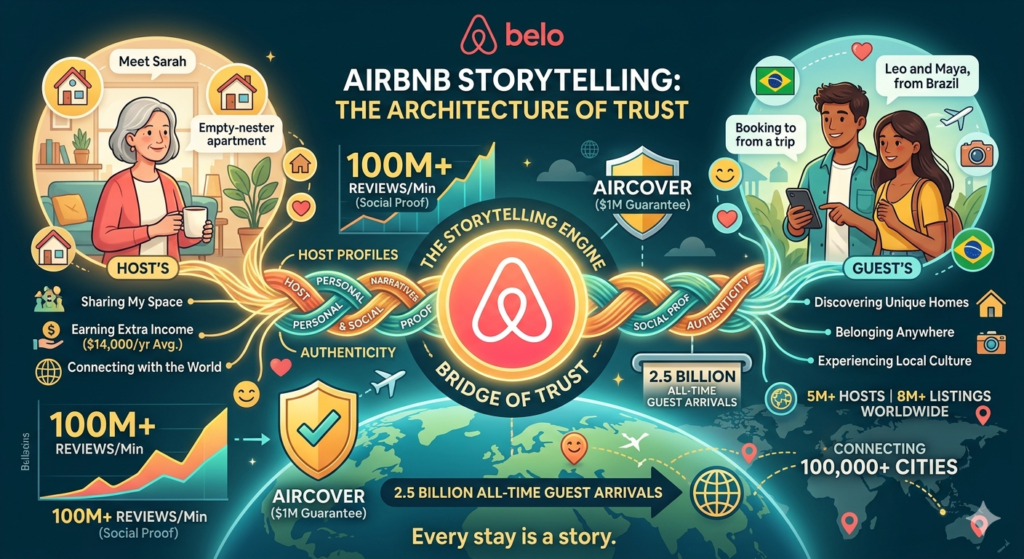
Airbnb, founded in 2008, revolutionized the hospitality industry by allowing individuals to rent out their homes to travelers worldwide. Despite its innovative platform, Airbnb faced a critical challenge: trust. How could the company convince homeowners to open their homes to strangers and travelers to stay in unfamiliar spaces? The answer lay in business storytelling, which became central to Airbnb’s growth strategy and brand identity.
Company Background
- Founders: Brian Chesky, Joe Gebbia, Nathan Blecharczyk
- Headquarters: San Francisco, California, USA
- Industry: Travel & Hospitality / Online Marketplace
- Mission: “To create a world where anyone can belong anywhere.”
Airbnb’s platform allowed hosts to list spaces ranging from a single room to an entire home. Unlike traditional hotels, Airbnb had to rely on the trust of both hosts and guests to scale.
The Challenge
By 2010, Airbnb was struggling to gain traction:
- Hosts: Reluctant to trust strangers with their property.
- Guests: Hesitant to stay in a stranger’s home instead of a hotel.
- Brand Perception: The company was viewed as risky and unprofessional.
Airbnb needed to redefine the narrative around home-sharing to:
- Create emotional engagement to drive adoption and loyalty.
- Build trust between users.
- Differentiate Airbnb from hotels and other platforms.
Storytelling Strategy
Airbnb implemented a multi-layered storytelling approach:
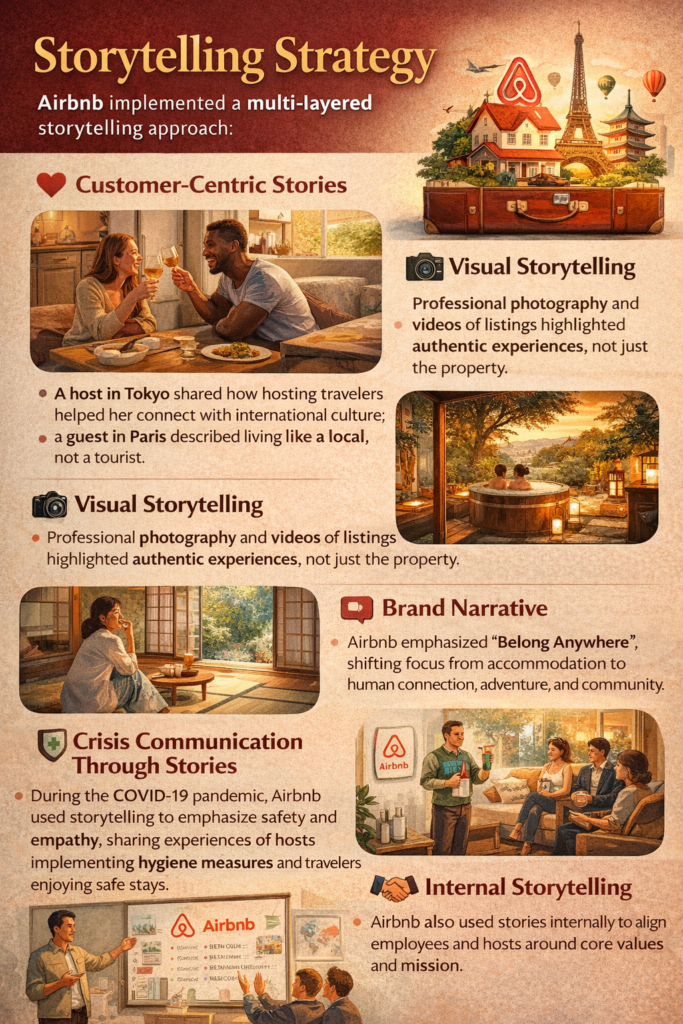
Customer-Centric Stories
- Airbnb showcased real stories of hosts and guests.
- Example: A host in Tokyo shared how hosting travelers helped her connect with international culture; a guest in Paris described living like a local, not a tourist.
Visual Storytelling
- Professional photography and videos of listings highlighted authentic experiences, not just the property.
Brand Narrative
- Airbnb emphasized “Belong Anywhere”, shifting focus from accommodation to human connection, adventure, and community.
Crisis Communication Through Stories
- During the COVID-19 pandemic, Airbnb used storytelling to emphasize safety and empathy, sharing experiences of hosts implementing hygiene measures and travelers enjoying safe stays.
Internal Storytelling
- Airbnb also used stories internally to align employees and hosts around core values and mission.
Results & Impact
- Trust: Stories reassured potential hosts and guests, increasing listings and bookings.
- Differentiation: Airbnb became a platform not just for lodging, but for experiences.
- Global Adoption: Millions of listings across 220+ countries.
- Investor Confidence: Storytelling reinforced Airbnb’s value proposition beyond just financial metrics, aiding fundraising rounds.
Analysis
- Emotional Connection: Airbnb leveraged storytelling to connect on an emotional level, not just transactional.
- Brand Consistency: Every story, visual, and campaign reinforced the brand’s narrative.
- User Advocacy: Stories encouraged hosts and guests to share their own experiences, amplifying the platform’s reach organically.
- Strategic Flexibility: Airbnb adapted its stories to evolving contexts, e.g., crisis situations like COVID-19.
This case demonstrates how business storytelling can transform perceptions, build trust, and create competitive advantage. It is useful for courses in marketing, brand management, entrepreneurship, and organizational behavior.