🔷 Introduction
NVIDIA has transformed from a gaming hardware company into the world’s most important AI infrastructure provider. Today, it powers everything from ChatGPT to autonomous vehicles—making it one of the fastest-growing companies in history.
🏁 1. Company Background
- Founded in 1993 by Jensen Huang, Chris Malachowsky, and Curtis Priem
- First major breakthrough: GeForce 256 (1999) – called the world’s first GPU
- Key innovation: CUDA (2006) – enabled GPUs to be used beyond graphics
👉 This shift laid the foundation for AI computing dominance
📊 2. Explosive Financial Growth
🔥 Key Financial Data (Recent Years)
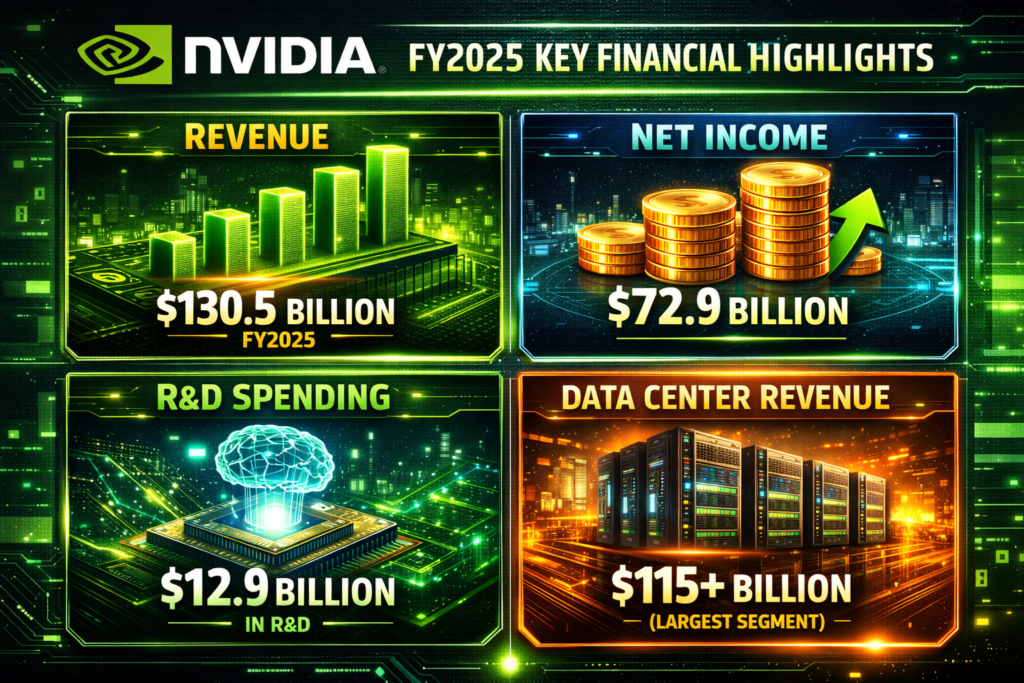
- Revenue (FY2025): $130.5 billion
- Net Income: $72.9 billion
- R&D Spending: $12.9 billion
- Data Center Revenue: $115+ billion (largest segment)
🚀 Growth Highlights
- Revenue grew 125%+ in one year (2023)
- Quarterly growth hit 262% YoY in 2024
- Market cap crossed $4 trillion in 2025
👉 This is one of the fastest growth stories in corporate history
🧠 3. Business Model: Why NVIDIA Wins
🔑 Core Strategy
NVIDIA doesn’t just sell chips—it sells an entire AI ecosystem:
- Hardware (GPUs)
- H100, H200, Blackwell chips dominate AI training
- Software (CUDA Platform)
- Industry-standard for AI developers
- Full Stack AI Infrastructure
- GPUs + Networking + AI frameworks
👉 This creates a high switching cost, locking customers into NVIDIA
🌐 4. The AI Boom Advantage
- NVIDIA controls 70–80% of AI chip market share
- Data center revenue grew 200%+ due to AI demand
- Major clients:
- Microsoft
- Amazon
- Tesla
👉 GPUs are now called the “oil of the AI economy”
⚙️ 5. Key Products Driving Growth
💡 AI Chips
- H100 / H200 – AI training standard
- Blackwell – next-gen architecture
🎮 Gaming GPUs
- GeForce series still strong in gaming
🚗 Emerging Segments
- Autonomous driving
- Robotics
- Metaverse & simulation
📦 6. Supply Chain & Ecosystem Strategy
- Works with manufacturers like TSMC
- Acquired Mellanox → improved networking
- Builds AI factories with cloud partners
👉 NVIDIA is not just a chip company—it’s an AI infrastructure platform
📉 7. Challenges & Risks
⚠️ Key Threats
- Big Tech Competition
- Google TPUs
- Amazon Trainium
- Microsoft custom chips
- Supply Constraints
- Memory shortages may limit production
- Overdependence on AI
- Heavy reliance on data center segment
📈 8. Strategic Moves (Recent Developments)
- Investing $2 billion in AI ecosystem partnerships
- Expanding AI infrastructure globally
- Launching next-gen chips (Rubin, Blackwell successors)
👉 Focus: own the entire AI stack
🏆 9. Why NVIDIA is Dominating
🔥 Competitive Advantages
- First mover in GPU computing
- Strong developer ecosystem (CUDA)
- Massive demand from AI boom
- High profit margins (~70%+)
👉 Result: Near-monopoly in AI computing
🧩 10. Lessons for Businesses
💡 Key Takeaways
- Innovate early (CUDA in 2006 paid off decades later)
- Build ecosystems, not just products
- Invest heavily in R&D
- Ride mega trends (AI, cloud computing)
- Create high switching costs
✍️ Conclusion
NVIDIA’s journey shows how a company can reinvent itself by aligning with future technologies. From gaming GPUs to becoming the foundation of artificial intelligence, NVIDIA has positioned itself at the center of the next industrial revolution.
👉 If AI is the future, NVIDIA is its engine