Introduction: A Strategic Homecoming
Flipkart is one of India’s most influential e‑commerce companies, having transformed the way millions of people shop online. Recently, the company has once again made headlines with its much‑talked‑about Flipkart’s reverse flip, signaling a new phase in its journey. Founded in 2007 by Sachin Bansal and Binny Bansal, the company started as a small online bookstore and quickly grew into a massive digital marketplace offering everything from electronics and fashion to groceries. With strong logistics, innovative customer services like cash-on-delivery, and backing from Walmart, Flipkart has become a key player in India’s booming digital economy and is now preparing for a major IPO that could reshape the country’s e-commerce landscape.
In 2026, Flipkart made a significant strategic decision by moving its holding company from Singapore back to India. This move, commonly known as a “reverse flip,” is widely seen as preparation for a large Initial Public Offering (IPO) in the coming years.
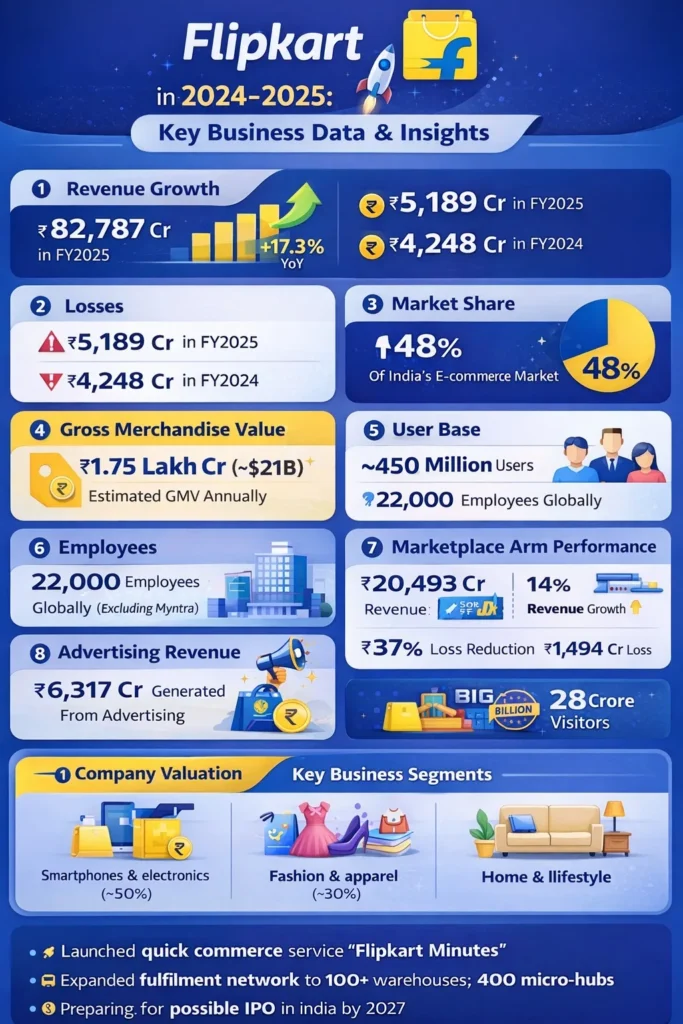
Key Company Facts
- Founded: 2007
- Founders: Sachin Bansal and Binny Bansal
- Headquarters: Bengaluru, India
- Major Investor: Walmart (majority stakeholder)
- Estimated Valuation: $35–40 billion
- Customers: 450–500 million users
- Sellers on Platform: More than 1.5 million
- Major Business Units: Myntra, Ekart, Shopsy
These numbers illustrate the massive scale that Flipkart has achieved within a relatively short period.
The Early Growth of Flipkart
Flipkart’s early success was driven by its focus on solving key challenges in India’s online retail market. At the time, logistics infrastructure was weak and consumers were skeptical about online payments.
To overcome these challenges, the company introduced several innovations.
Major Early Innovations
- Cash-on-Delivery: Allowed customers to pay after receiving products.
- Easy Returns Policy: Increased customer confidence in online shopping.
- Strong Logistics Network: Creation of Ekart for reliable delivery.
- Large Discount Campaigns: Attracted millions of new customers.
These strategies helped Flipkart rapidly expand its customer base and establish itself as a leader in India’s e-commerce market.
Walmart’s Landmark Investment
In 2018, Flipkart reached a major milestone when Walmart acquired a majority stake in the company. The deal was one of the largest acquisitions in global retail history.
Key Details of the Walmart Deal
- Year of acquisition: 2018
- Investment amount: Approximately $16 billion
- Stake acquired: Around 77%
- Purpose: Strengthen Walmart’s presence in India’s e-commerce market.
The investment provided Flipkart with financial resources, global retail expertise, and improved supply chain capabilities.
Understanding the “Flipkart's Reverse Flip”
Many startups initially register their holding companies overseas to attract international investors and simplify funding processes. Flipkart followed this approach by moving its holding company to Singapore in 2011.
However, in 2026 the company decided to bring its corporate structure back to India.
Reverse Flip Explained
A reverse flip occurs when a startup:
- Moves its parent company back to its original home country
- Restructures international corporate entities
- Aligns with domestic regulations and capital markets.
Flipkart’s reverse flip involved transferring its holding company from Singapore to India, simplifying its corporate structure and preparing for a potential IPO.
Reasons Behind Flipkart’s Move Back to India
Several strategic factors influenced this decision (Flipkart’s reverse flip).
Key Reasons
- IPO Preparation
Relocating to India simplifies the process of listing on domestic stock exchanges. - Regulatory Alignment
Operating under Indian corporate structures improves compliance with local laws. - Investor Confidence
Being headquartered in India can attract domestic institutional and retail investors. - Simplified Corporate Structure
Consolidating subsidiaries improves transparency and governance. - Growing Indian Capital Markets
Indian investors are increasingly willing to invest in technology companies.
These factors made India a more attractive base for Flipkart’s future growth.
Flipkart’s Current Market Position
Flipkart has established itself as one of the largest e-commerce companies in India.
Market Strength Indicators
- Hundreds of millions of active customers
- More than 1.5 million sellers on the platform
- Extensive logistics network covering thousands of cities and towns
- Strong presence in fashion through Myntra
- Growing social commerce platform through Shopsy
The company’s logistics arm Ekart enables deliveries across both metropolitan cities and smaller towns, giving Flipkart a competitive advantage.
However, competition in the industry remains intense.
Major Competitors
- Amazon
- Reliance Retail
- Meesho
Each of these companies is investing heavily to capture a larger share of India’s growing e-commerce market.
Industry Growth Opportunities
India’s e-commerce industry is expected to grow significantly in the coming years.
Key Industry Trends
- Rapid increase in smartphone usage
- Expansion of internet access in rural areas
- Rising middle-class population
- Growth of digital payment systems
- Increasing demand for fast delivery and convenience
Experts estimate that India’s e-commerce market could exceed $200 billion by 2030, creating enormous opportunities for companies like Flipkart.
SWOT Analysis of Flipkart
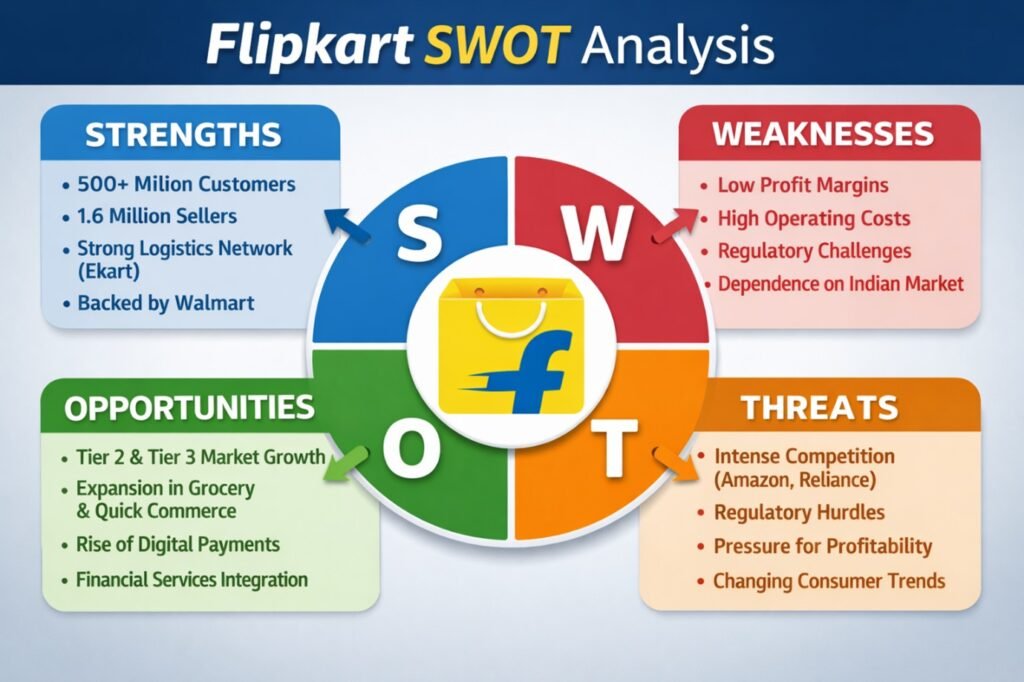
SWOT analysis helps evaluate Flipkart’s internal strengths and weaknesses along with external opportunities and threats in the rapidly evolving Indian e-commerce market.
PESTLE Analysis
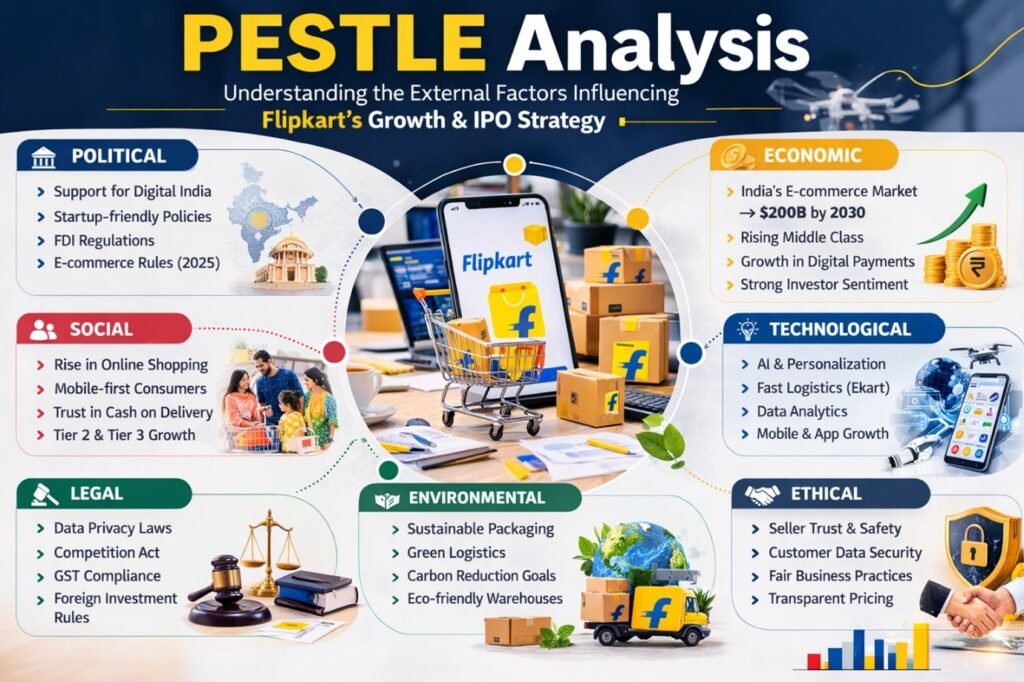
PESTLE analysis helps examine the external factors that influence Flipkart’s business environment and strategic decisions.
Challenges Facing Flipkart
Despite its strong market position, Flipkart faces several challenges as it prepares for a potential IPO.
Major Challenges
- Profitability Pressure
Heavy investments in logistics and marketing reduce short-term profits. - Intense Competition
Amazon and Reliance Retail continue to expand aggressively. - Regulatory Complexity
Strict government regulations for foreign investment in e-commerce. - High Customer Acquisition Costs
Discounts and promotions are often required to attract new users.
Successfully managing these challenges will be crucial for Flipkart’s long-term growth.
Impact on India’s Startup Ecosystem
Flipkart’s reverse flip reflects a broader trend within India’s startup ecosystem.
In the past, many Indian startups preferred to incorporate overseas due to better access to venture capital and simpler corporate structures.
However, the situation is now changing.
Emerging Startup Trends
- More startups considering Indian headquarters
- Increasing strength of domestic stock markets
- Growing interest from Indian institutional investors
- Government support for domestic technology companies.
Flipkart’s move could encourage other major startups to bring their corporate structures back to India.
The Road Ahead
As Flipkart moves closer to its potential IPO, the company will focus on strengthening its core operations and improving profitability.
Future Strategic Priorities
- Expanding logistics infrastructure
- Improving delivery speed and efficiency
- Strengthening seller networks
- Investing in artificial intelligence and data analytics
- Expanding into financial services and digital advertising.
These initiatives will help Flipkart maintain its leadership position in India’s highly competitive e-commerce market.
Conclusion
Flipkart’s reverse flip represents a significant milestone in its journey from a startup to a global technology company. By shifting its holding company back to India, the company has aligned itself more closely with its primary market and strengthened its preparation for a future IPO.
Key Takeaways
- Flipkart is one of India’s most successful e-commerce companies.
- The company moved its holding structure from Singapore back to India in 2026.
- The decision is closely linked to its planned IPO.
- The move reflects growing confidence in India’s capital markets.
- Flipkart’s strategy may influence other startups to return their headquarters to India.
Refer to the link for more details: Flipkart’s Reverse Flip Strategy