Pepsi’s marketing playbook over the past two years has been defined by bold campaigns, digital savvy, and a relentless push to outshine its rivals. Marking 125 years of the iconic brand in 2023, Pepsi reinvigorated its image with a retro-modern rebrand, massive global ad spends, and a series of innovative initiatives to captivate consumers worldwide. Below we break down the key pillars of Pepsi’s recent marketing strategy – from big-budget advertising and celebrity partnerships to cutting-edge digital engagement and purpose-driven branding – highlighting how Pepsi has kept its edge in the ever-evolving “Cola Wars.”
1. Big, Bold Advertising Campaigns
Pepsi has doubled down on high-impact advertising across TV, digital, and print, often blending nostalgia with contemporary flair. In 2023, the company launched a monumental “Pepsi 125” anniversary campaign, a 125-day media blitz celebrating the brand’s 125th birthday. This global campaign rolled out 125 marketing “pulses” (activations) across platforms – from traditional TV and print ads to social media content, SMS promotions, and even a pop-up Pepsi Diner experience in New York City. The idea was to honor Pepsi’s storied past (calling back to classic ads like the Pepsi Challenge and the 90s “Pepsi Girl”) while introducing its first new logo in 14 years – a modern update inspired by its 1980s–90s look, with a bold black font and an electric blue and red globe design. This retro-forward branding tapped into consumer nostalgia and signaled Pepsi’s “next era” with a visual identity aiming to energize younger audiences without alienating long-time fans.
Pepsi’s advertising in 2024–2025 also embraced immersive storytelling and experimentation. For example, it resurrected the tradition of pairing Pepsi with food in witty ways. Building on the “Better with Pepsi” theme (introduced in 2021), Pepsi’s ads humorously positioned a cold Pepsi as the perfect companion to popular foods like burgers, pizza, and hot dogs. In late 2022, a holiday campaign even had actress Lindsay Lohan promoting “Pilk” (a quirky Pepsi-and-milk mix) in a viral video, blending pop-culture fun with product promotion – a testament to Pepsi’s playful brand voice (a tactic it revisited during the 125th anniversary celebrations).
To maximize reach, Pepsi is not shy about investing heavily in promotions. In 2024 alone, PepsiCo spent a massive $3.9 billion globally on advertising and promotions, funding high-production commercials and innovative content across markets. These big bets have paid off in brand visibility: Pepsi’s advertising has consistently generated buzz – from star-studded Super Bowl spots in earlier years to locally resonant campaigns in key international markets (detailed more below). By leading with bold creative concepts, nostalgia, and significant media spend, Pepsi ensures its branding stays top-of-mind for consumers around the world.
2. Social Media & Influencer Marketing
Pepsi’s global marketing in the past two years has been deeply social-first, leveraging the power of viral content and influencer clout to engage younger audiences. The brand doesn’t just advertise at consumers on social platforms – it actively invites participation. One standout example was the #PepsiCanBalance challenge, where users filmed themselves balancing a Pepsi can on their body while dancing. This quirky TikTok challenge went viral, racking up over 1 billion views within months. Such explosive engagement not only amplified Pepsi’s brand visibility but also turned consumers into co-creators of Pepsi content, fostering a sense of community and fun around the brand.
In addition to user-generated content, Pepsi has forged partnerships with digital influencers and creators to tap into their massive followings. A notable case was Pepsi’s collaboration with Charli D’Amelio – TikTok’s biggest star – to promote the launch of Pepsi Mango, a new flavored cola. D’Amelio’s Pepsi Mango dance challenge and exclusive product kits for other popular TikTok and Instagram influencers led to a wave of online buzz, generating over 50 million impressions in a matter of weeks. This influencer-driven strategy successfully introduced the new flavor to Gen Z and millennial consumers, translating social media hype into higher-than-expected trial sales.
Pepsi also isn’t afraid to experiment with emerging digital trends. It was one of the first soda brands to dip into the world of Web3: in late 2021, it launched “Pepsi Mic Drop” NFTs – a limited collection of music-inspired digital collectibles – as a novel way to excite fans and celebrate Pepsi’s musical heritage. While the initial NFT craze has since cooled, Pepsi’s willingness to innovate with new platforms and technologies underscores a broader strategy: meeting consumers where they are online. Whether it’s viral TikTok stunts, Instagram-worthy packaging reveals, or Twitter (now X) banter, Pepsi’s social media and influencer campaigns over the past two years have kept the brand culturally relevant and continually trending.
3. Sponsorships & Partnerships in Sports and Entertainment
Aligning with beloved sports and entertainment properties remains a cornerstone of Pepsi’s global marketing strategy. Even after ending its decade-long run as Super Bowl Halftime Show sponsor (2013–2022) – a period in which Pepsi reportedly spent nearly $2 billion to own the NFL’s biggest stage – Pepsi still maintains a formidable presence in sports. It has been the official soft drink sponsor of the NFL for over 20 years, ensuring that football fans see Pepsi branding throughout game day, from stadium signage to digital content and halftime promotions. Likewise, Pepsi famously ousted Coca-Cola as a partner of the NBA in 2015, securing rights across North America, China, and more – a move that gave Pepsi’s beverage portfolio prime exposure during NBA games globally.
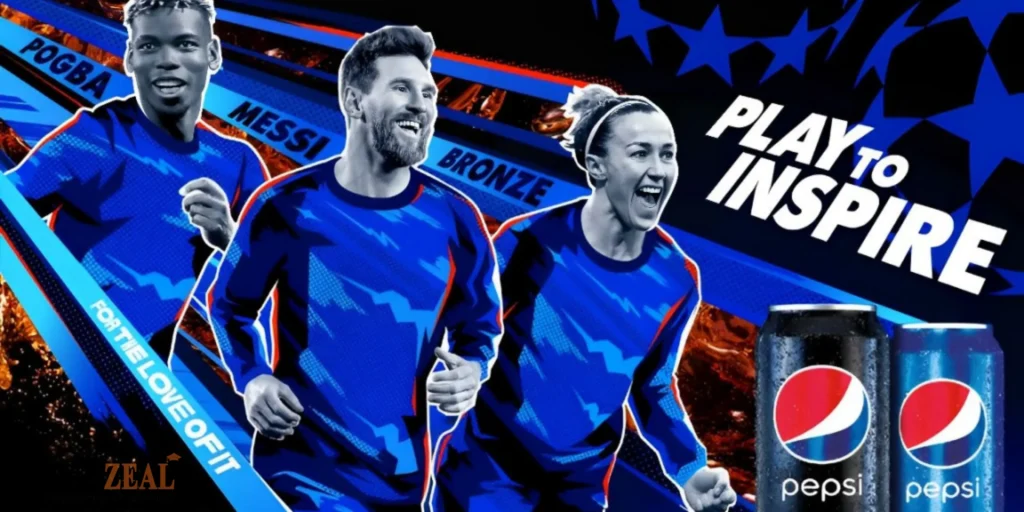
On the international stage, PepsiCo has solidified itself as a major force in soccer and music. The Pepsi brand has served as a primary sponsor of the UEFA Champions League (UCL) since 2015, one of the world’s most-watched sporting events, and recently renewed this partnership. In 2023, to amplify the UCL sponsorship, Pepsi rolled out star-powered campaigns featuring global football icons like Lionel Messi, Ronaldinho, and Paul Pogba, directly engaging the tournament’s massive fanbase. In music, Pepsi continues its long-running sponsorship of the Grammy Awards, frequently producing tie-in ads that feature pop superstars such as Beyoncé, Britney Spears, and Doja Cat – reinforcing Pepsi’s identity as a brand at the heart of music and youth culture.
Pepsi’s partnerships extend to unique events and local cultural moments as well. In 2025, Pepsi hosted the “Pepsi NOLA Eats Fest” in New Orleans – a free food and music festival showcasing local cuisine and Pepsi-inspired dishes and drinks. With celebrity chefs and artists (like rapper Action Bronson) in attendance, the festival intertwined Pepsi products with the city’s vibrant food culture, creating a memorable experiential marketing event that strengthened community ties and positive brand perception. From the football field to concert stages and community festivals, Pepsi’s strategic sponsorships ensure its logo and products are constantly in the limelight, associating the brand with the excitement of sports, music, and shared experiences.
4. Product Innovation and Packaging
In a fiercely competitive beverage market, Pepsi has actively innovated its product lineup and packaging to align with consumer trends. One major focus in recent years has been zero-sugar beverages and novel flavors. In early 2023, Pepsi introduced a new and improved formulation of Pepsi Zero Sugar, designed to taste more like the classic cola. The company heavily promoted this “better-tasting” zero-calorie Pepsi – even making it the star of new ads during NFL games and the 2023 Super Bowl broadcasts, highlighting Pepsi Zero Sugar’s close association with the NFL. The strategy reflects Pepsi’s recognition that health-conscious consumers and sugar-wary drinkers are a growing segment, and that zero-sugar offerings can drive growth in the coming years.
Pepsi has also kept excitement high by launching limited-edition flavors and product twists. For instance, it debuted Nitro Pepsi in 2022 – the first-ever nitrogen-infused cola that pours with a foamy head like a stout beer – to offer a smoother, creamier soda experience and generate buzz among curious consumers. In late 2024, Pepsi also surprise-launched a special Gingerbread-Flavored Pepsi Zero Sugar as a holiday promotion – notably, the brand’s first holiday-themed soda in two decades. This gingerbread cola was sold in select stores and through a social media storefront on TikTok, combining product innovation with a savvy digital sales strategy targeting younger shoppers.
Packaging is another area of innovation, both for branding and sustainability. Pepsi’s 2023 rebrand not only updated the logo but also overhauled packaging design: the new cans and bottles feature the electric blue and black color palette tied to Pepsi’s modern look (with black emphasizing zero-sugar variants). Beyond aesthetics, PepsiCo has been investing in eco-friendly packaging solutions as part of its Pep+ (PepsiCo Positive) initiative. The company is developing lighter plastic bottles and exploring compostable and bio-based materials to reduce plastic usage. For example, PepsiCo introduced paper-based inner packaging for its Quaker Oats products as a pilot to cut down on single-use plastic. These product and packaging innovations not only keep Pepsi’s offerings fresh and appealing, but also demonstrate responsiveness to consumer demands for healthier options and sustainability.